
Long distance is the only triathlon distance where the preparation matters more than race day itself. Make a mistake over a sprint and you lose minutes. Make one over the full distance and you are standing at the roadside eight hours in.
That is why the demands are different from any shorter distance — and why no training plan you print once and work through will hold up here.
What the distance actually demands
What decides it is not top-end speed but the ability to work at a very economical level for many hours — and to eat, drink and think while doing it. Three things determine the outcome:
- A durable base. The volume has to be built over months, not weeks. Tendons, ligaments and metabolism need time to come along.
- A fuelling plan that works. It is practised in training, not tried out on race day.
- A realistic race pace. Most long-distance disasters are created in the first two hours on the bike and only show up in the marathon.
All three can be planned. But only if the planning runs alongside you, rather than being fixed in January.
Your first long distance: finishing is the goal
If your aim is to finish the distance, that is not a smaller goal than a personal best — it is a different one. And it needs a different approach.
The priority is staying healthy: the build-up is managed so that you reach the start line in one piece. In practice that means smaller increases, more recovery weeks, and dealing with fuelling and equipment far earlier than most people expect.
Typical themes in the first year:
- How many weeks of preparation are realistic — based on where you are today, not on a standard table.
- What the longest sessions should look like, so they prepare you rather than flatten you for days.
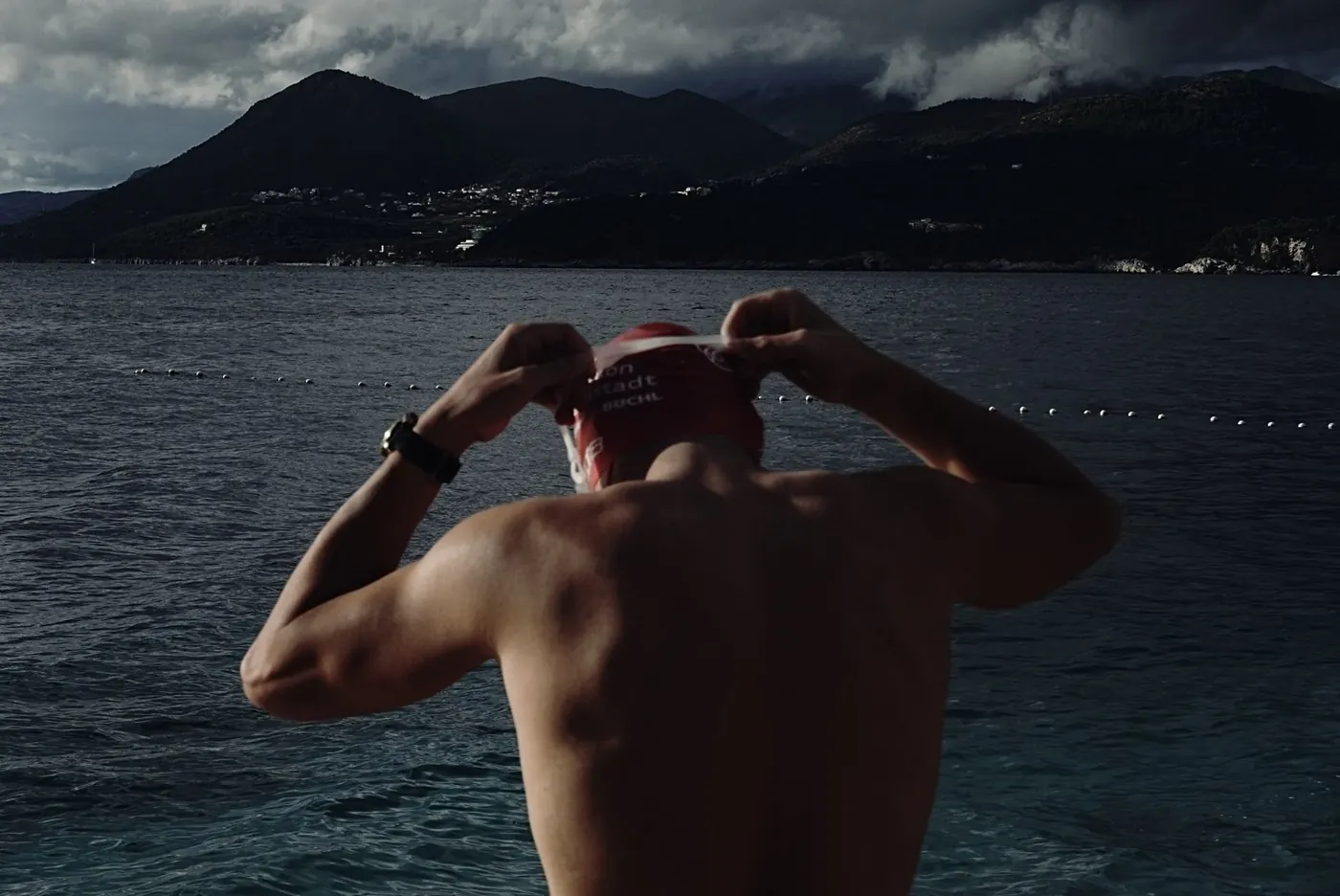
- How to become confident in open water — for many first-timers the biggest mental hurdle of the distance.
- What a race day looks like when you deliberately start slower than you could.
You will find athletes who have taken this route under reviews — including finishers who, in their own words, went into their first long distance relaxed and genuinely looking forward to it.
Getting faster over the full distance
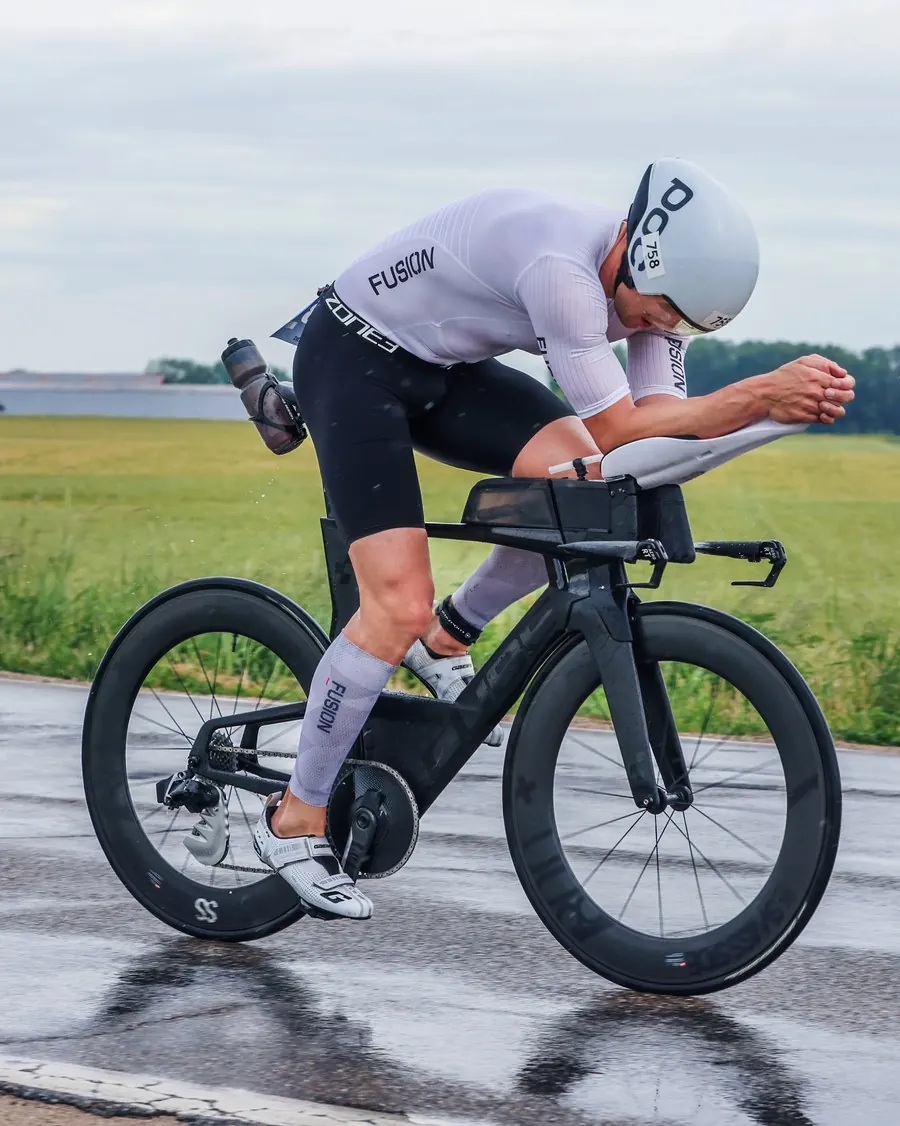
Once you know the distance, the task changes completely. It is no longer about getting through it, but about turning the right screws — and those are different for every athlete.
The steering gets finer here: load is timed more tightly, the data analysis goes deeper, and race strategy becomes a piece of work in its own right. Typical starting points:
- Economy, not peak numbers. Over this duration, what counts is how little energy a given pace costs you.
- Finding the weak link. The biggest reserve is often not in the discipline that feels worst.
- Fuelling at race level. Taking in more means being able to produce more — and that can be trained.
- Pacing and race plan. Detailed race plans covering strategy, pacing and fuelling are part of the coaching from Premium upwards.
Briefly about me: 8:34 over the full distance, 3:47 over the half, and twelve overall podiums. So I know this distance from more than paper.
For six years I have worked on training prescription, nutrition and equipment almost daily. Much of it I tried on myself first, before it went into a plan for an athlete.
Fuelling: where most races come apart
When a long distance goes wrong, surprisingly often it is not fitness that fails but the stomach. The research here is unusually clear and genuinely usable.
For a long time the rule of thumb was simple: roughly 60 grams of carbohydrate per hour from a single source, around 90 grams if you mix different carbohydrates that are absorbed by different routes. The second part still holds — take 90 grams from a single source and the surplus sits in the gut, with the consequences familiar to anyone who has seen people standing at the side of the run course.
The upper end, however, has moved considerably. In two randomised trials with elite mountain and trail runners, 120 grams per hour came out ahead of both 90 and 60: lower muscle damage markers after the race, a lower perceived load during it, and better recovery 24 hours later.
The decisive clause in those studies: the participants had deliberately trained their gut for those amounts beforehand. 120 grams is not a number you try out on race day — it is the result of months of work.
What I work with in practice
There is no single figure that covers every session — the amount depends on duration and intensity. The rough direction we work in:
- Easy base training: 40 to 80 grams per hour. The aim here is not maximum intake but getting through the session cleanly and still being functional afterwards.
- Hard and long sessions: 90 to around 140 grams per hour. The top of that range is not a starting point but a target worked towards over months — and it is not reachable for everyone.
Because absorption capacity is not fixed — it can be trained. That is exactly why fuelling belongs in the training plan here rather than on a race-day checklist: the long sessions are also the training for your gut. More recent reviews argue along the same lines for a carbohydrate strategy matched to the individual session rather than rigid blanket figures.
Why strength work counts over this distance
To long-distance athletes, strength training often feels like wasted time — hours that could be spent riding or running. The evidence says otherwise: a review of concurrent endurance and strength training concludes that running economy improves with accompanying strength or explosive-strength work; on the bike, heavy strength training in particular shows an effect.
Economy is exactly the quality that makes the difference over eight hours. So specific strength and stability work is a fixed part of the coaching here, built into the week without eating your time — and from Premium upwards as fully integrated strength coaching.
Why coaching matters especially over this distance
Preparing for a long distance runs over many months. In that time something will happen: a cold, a crunch period at work, a week of bad sleep. A plan written in January knows none of it.
The real value of coaching therefore lies not in the first plan but in the hundred small corrections afterwards — and in recognising when a hard session ought to be cut. That is exactly what the life-load approach is about.
How that runs in practice is on the triathlon coaching page; how the planning itself is built is under training plans. Prices are on the pricing page.
Common questions about the full distance
How long does preparation take?
That depends entirely on where you start. Someone with several years of endurance background needs a different lead time from someone who took up the sport a year ago. An honest answer is only possible once I know where you stand — which is what the free intro call is for.
Do I need to have done a half distance first?
It is not compulsory, but it usually makes sense: a half distance is the best test of fuelling, equipment and race-day routine — under conditions where a mistake does not cost you the whole season.
How many hours a week do I need?
There is no blanket figure here either. More important than the number of hours is that the time is reliably available — the plan is built around your week, not the other way round. If that is exactly your problem, because meetings and travel dictate your week, there is more on long distance on limited time.
Do I need a time-trial bike and a power meter?
To start, a sports watch and a bike that works are enough. A power meter is, however, the single most worthwhile investment over this distance, because it gives the most reliable basis for pacing the bike leg. Whether and when that is worth it for you is something we discuss — buying expensive equipment at the start is never necessary.
Do you coach athletes who have not picked a race yet?
Yes. Season planning — which race makes sense, and when — is part of the coaching and is often one of the first things we talk about.